
What the Shadow Holds
Darkness as presence, not absence
Umbra is the darkest part of a shadow, the region where no light reaches. I used to treat that part of a painting as something to move through on the way to brightness. Lately I have been reconsidering.
I keep thinking about how many creation stories begin exactly here, in the dark. In Genesis, before anything else, there is darkness and void. Then light. Ancient Egyptian cosmology describes the same beginning, a primordial darkness called Nun from which all creation emerges. The Maori tradition speaks of Te Kore, the void, then Te Po, the darkness, before light arrives. Hindu creation stories follow the same arc. I find it striking that so many different peoples, with no connection to each other, began their understanding of existence the same way. Darkness is not the end of the story. In almost every tradition I have come across, it is the beginning.
In Persian mystical thought, what is hidden is not absent. It is present in a different register. The veil is not a wall. It is a threshold. What lies behind it is not nothing. It is something we have not yet developed the capacity to see. I grew up in a culture where this was not philosophy. It was simply understood. I remember my grandmother talking to her sister about a house that had a presence in it. Not in a frightening way. In the same tone she might use to discuss the weather. The conversation moved on. No one thought it required an explanation. That matter of factness has stayed with me.
The idea that the invisible is simply part of what is real, not supernatural, not strange, just another layer of what exists. I have found this same understanding in places with no connection to each other. The Japanese concept of ma describes the quality of negative space, the pause between notes, the emptiness in a room that gives the room its character. In Japanese aesthetics, the empty space is not nothing. It is where meaning gathers. And in many West African traditions, darkness is associated with gestation, the darkness of the seed underground, the moment before something comes into being. The shadow is not a failure of light. It is where things are still becoming.
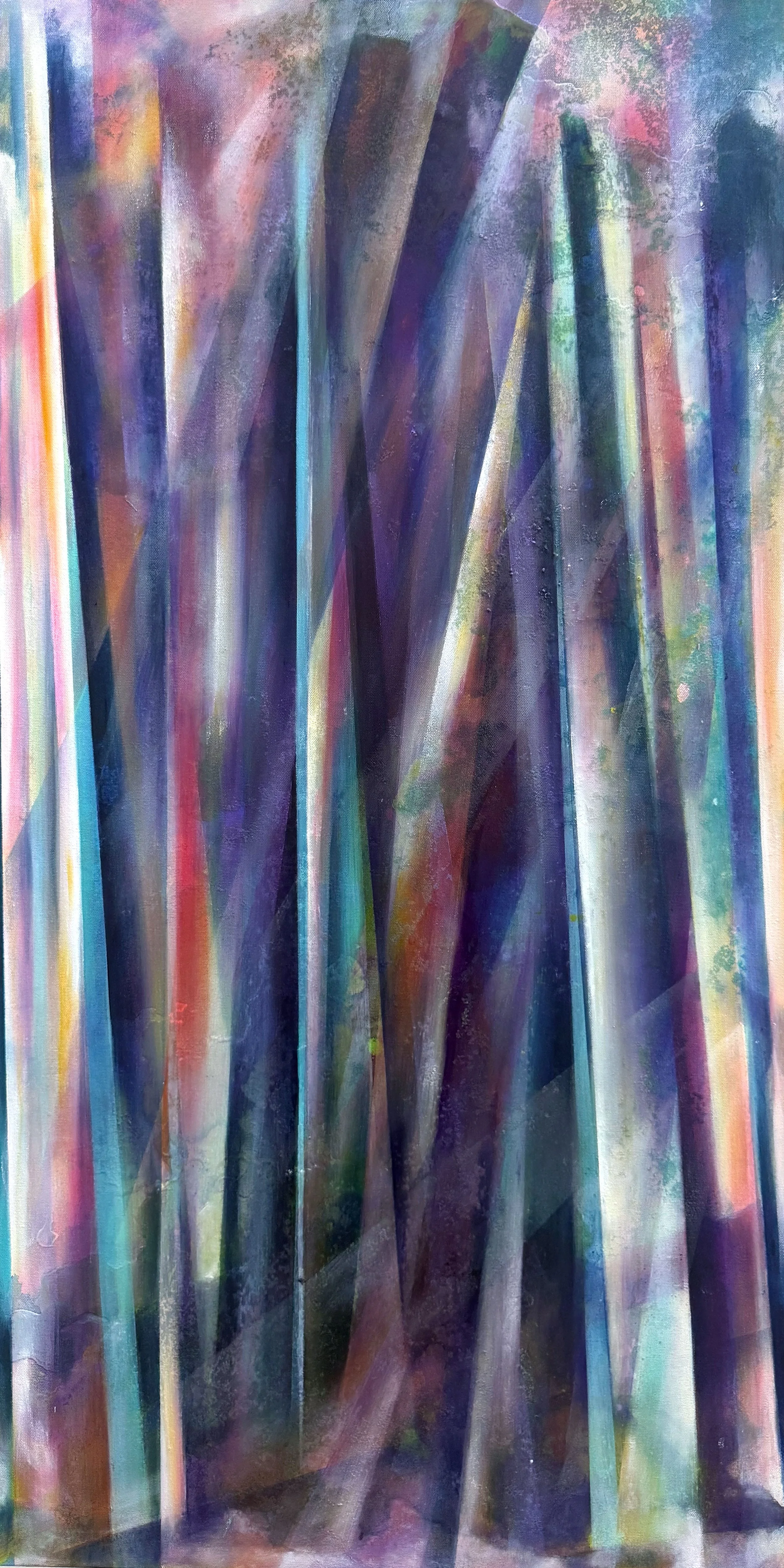
Umbra
48X24” I Acrylic and oil on canvas
Umbra came from staying in the dark part of the painting longer than I usually would. I kept wanting to push toward the light. That is an old habit. Instead I stayed. And what I found there was not emptiness. There was depth and color and complexity I would have flattened if I had rushed. The shadow was doing its own work. I just had to get out of the way.
What are you moving past too quickly? That might be exactly where something is forming.
Follow me on Substack
